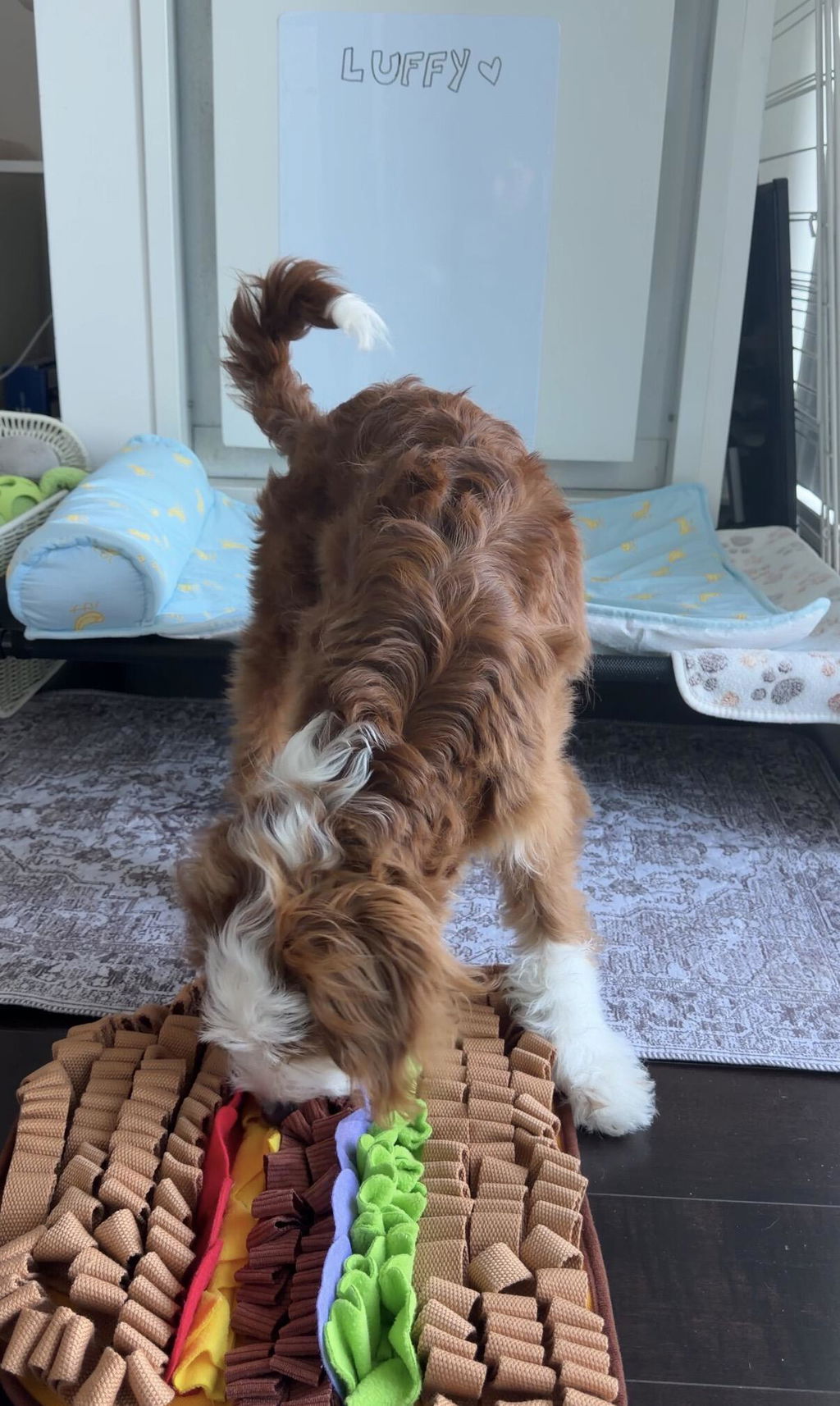
If you've been hearing about lick mats lately and wondering whether they're actually worth it, you're in the right place. As a dog parent, you want to give your fur baby the best enrichment and lick mats are one of those genuinely useful tools that tend to become a daily ritual once you try them.
Let's walk through everything you need to know about what lick mats actually are, why dogs love them, how to use one properly, and what to fill it with. No fluff, just honest, practical information from one dog lover to another.
What Is a Dog Lick Mat?
A dog lick mat is a flat, textured mat usually made from food-grade silicone or rubber with ridges, bumps, and grooves across its surface. You spread soft food into those grooves, and your dog spends time licking it all out.
The idea is beautifully simple. Repetitive licking triggers the release of endorphins which is your dog's natural feel-good chemicals. So while they're working away at their mat, their body is actively calming itself down. It's not just a snack - it's a whole sensory experience.
You might also see some pet parent call them lick mats, licking pads, or licking mats — they're all the same thing, just different names.
Why Do Dogs Benefit From a Lick Mat?
We genuinely believe enrichment plays a huge role in a happy dog's life and lick mats are one of the easiest ways to deliver it. Here's what they actually do for your pup:
They Calm Anxiety Naturally
If your dog gets anxious during grooming, bath time, thunderstorms, fireworks, or vet visits, a lick mat can genuinely help.
When a dog licks repetitively, their nervous system responds. Endorphins are released, cortisol (the stress hormone) drops, and they settle into a focused, calm state. It's a natural response - the same reason dogs sometimes lick themselves when they're nervous. The trick is to introduce the mat proactively. Give it to your dog 5 to 10 minutes before the stressful event rather than in the middle of it. That focused licking gives their brain something to do instead of spiralling.
💛 A warm reminder: Lick mat sessions work best when you're nearby. Think of it as calm, cosy time together - not something to set and forget. Your presence makes the experience more settling for your dog too.
They Help Fast Eaters Slow Down
If your pup inhales their food in under 30 seconds, that can lead to bloating, discomfort, and digestive upset.
A lick mat makes them work for every bite. Instead of gulping, they're using their tongue to get food out of grooves and ridges, one small lick at a time. What used to take 30 seconds can easily stretch to 10 or 15 minutes. Their gut gets the chance to signal fullness properly. That alone is worth it.
They Provide Genuine Mental Enrichment
A dog's brain needs a workout just as much as their body does. Mental enrichment makes them think, focus, and problem-solve and is one of the best things you can give your pup, especially on days when getting outside is tricky.
Even a short 10 to 15 minute lick mat session gives your dog's brain a meaningful workout. That focus and concentration is genuinely tiring in the best possible way, leaving them calmer and more content afterward.
They Support Dental Health
When your dog licks a textured surface, it stimulates saliva production. Saliva is your dog's natural defence against plaque because it contains enzymes that help keep bacteria in check. The ridges on the mat also gently work around the tongue and mouth area. It won't replace brushing, but it does contribute to better oral hygiene over time.
They are Ideal for Raw Diets
If you feed a raw diet to your dog, a lick mat can make mealtimes more enriching and engaging. Soft raw foods can be spread across the textured surface, which encourages your dog to slow down and work for their meal instead of gulping it down quickly.
Many raw feeders also use lick mats to serve nutrient-rich additions such as kefir, goat's milk, bone broth, sardines, or blended fruits and vegetables. Spreading these foods across the mat creates a longer-lasting feeding experience while providing valuable mental stimulation.
What Can You Put on a Dog Lick Mat?
This is the fun part! The options are wide as long as you stick to dog-safe foods. Here are some of our favourites:
Peanut butter - always check it's xylitol-free. Xylitol is toxic to dogs, and it hides in a surprising number of human peanut butters.
Plain Greek yogurt - great source of probiotics, and most dogs absolutely love it.
Pumpkin puree - plain and unseasoned, not pie filling. Wonderful for digestion.
Wet dog food or pâté-style food.
Mashed banana or mashed sweet potato (boiled, no seasoning).
Unsalted bone broth - especially wonderful when frozen onto the mat.
Cream cheese, in small amounts.
Apple sauce or puree - no added sugar.
A tip that dog parents absolutely love: freeze the mat after spreading food on it. A frozen lick mat can keep your pup happily occupied for 20 to 30 minutes, and in summer, it doubles as a gorgeous cooling treat.
Foods to Always Avoid on a Lick Mat
Grapes, raisins, chocolate, onions, garlic, macadamia nuts, avocado, anything containing xylitol or birch sugar, and anything very salty or sugary. When in doubt, check with your local vet before spreading.
How to Use a Dog Lick Mat - The Right Way
There's not a big learning curve here, but a few habits make a real difference:
Start with something super enticing like peanut butter or their favourite wet food for the very first session. You want your dog to get hooked immediately.
Give a cue like "find it" or "lick mat" so your dog learns to associate the word with the activity.
Keep the session supervised but let them figure it out on their own. The challenge is part of what makes it enriching.
Introduce it before stressful events, not during. If bath time is in 10 minutes, hand it over now.
Freeze it for a harder challenge and longer engagement.
Rinse or clean it right after use - food dries into grooves quickly.
One thing worth knowing: some dogs get a little overexcited when the lick mat first appears, especially if they're very food motivated. That's completely normal! If your dog starts treating it more like a chew toy than a lick mat, calmly remove it, wait until they've fully settled — lying down, breathing calmly — and then reintroduce it. Done gently and consistently a few times, most dogs quickly learn to respect the mat and approach it calmly. It's a lovely little piece of training that happens naturally.
How to Find the Right Lick Mats for Your Dog?
Not all dogs are the same and you need the right lick mat to ensure proper enrichment. To help to clear the confusion, here are some factors you must consider before buying one:
By Difficulty
Beginner mats like the Creamy Hazelnut lick pad have simple, wider grooves that are easy to work through - great for puppies or dogs new to the concept. More complex mats like the Buttery Avocado or the Crispy Grapes have tighter, layered patterns that take longer to navigate and provide a deeper brain workout for experienced dogs.
By Features
Suction cup mats: These stick to tile, glass, or the side of your bathtub — brilliant for keeping the mat in place during grooming or bath time.
Freeze-safe mats: Most silicone mats can go in the freezer, but always double check before buying.
By Material
Food-grade silicone is the most popular material durable, easy to clean, and dishwasher safe. For snuffle mats and fabric-based enrichment mats, look for durable stitching and tough cotton-polyester webbing, which holds up well to daily enthusiastic use. No lick mat or snuffle mat is indestructible, but a well-made one cared for properly can last a long time.
By Size
Match the mat to your dog. A tiny mat won't hold enough food to keep a large dog engaged, and an oversized mat can feel a bit overwhelming for a small breed. Most manufacturers guide you on sizing by breed weight.
How to Clean a Dog Lick Mat Properly?
Cleaning is the part most people underestimate - especially if you let the food dry! Here's what actually works:
Rinse immediately after use if you can. Wet food loosens easily when fresh.
Most silicone lick mats are dishwasher-safe - pop them on the top rack.
For dried food: soak in warm soapy water for 10 to 15 minutes, then use a soft brush (an old toothbrush is perfect) to get into the grooves.
Avoid harsh chemicals or bleach — your dog licks this thing, so gentle soap and warm water is always the right call.
Clean regularly. Food residue left in the grooves can become a source of bacteria over time, so washing after every few uses is just good practice.
Note - If you have a fabric-based enrichment mat, always place it in a mesh laundry bag before machine washing. This protects the fibres, keeps stray threads out of your machine, and means your mat stays in better shape for longer. Air dry fully before the next use.
Is a Lick Mat Right for My Dog?
Lick mats work well for almost any dog, but they're especially useful for:
Dogs with separation anxiety
Puppies who need calm distraction during training
Senior dogs who can't exercise as much but still need mental stimulation
Dogs recovering from surgery or injury
High-energy breeds that get bored easily
Dogs that bolt their food
Any dog that gets anxious during grooming, travel, vet visits, or storms
One thing to keep in mind: Lick mats are a wonderful enrichment tool, but they're not a fix for serious behavioural issues or medical concerns. If your dog has deep-rooted anxiety, excessive destructive behaviour, or health issues, please do reach out to your vet or a qualified behaviourist.
A Quick Comparison: Lick Mat vs. Regular Bowl
PawzNDogz lick mats are specially made for calming pets with extended meal times and regular mental enrichment. Here is what separates a thoughtfully created lick mat from a regular feeding bowl:
Regular Bowl
Lick Mat
Meal done in under 1 minute
Meal stretched to 10–20 minutes
No mental engagement
Active brain workout
Can cause bloating in fast eaters
Naturally slows eating pace
No calming effect
Releases endorphins, reduces stress
Just a bowl
A whole enrichment experience
Final Thoughts
A lick mat is one of those tools that sounds almost too simple and then you watch your dog settle into a calm, focused 20-minute licking session while you actually drink your morning coffee in peace, and you completely get it.
It's not magic. But as part of a loving daily routine - it's genuinely one of the best small things you can do for your dog's mental wellbeing and happiness. Start with peanut butter. Freeze it overnight and give it to your fur friend in the morning. Your dog's whole face will tell you everything you need to know.
Disclaimer: Lick mats are durable enrichment tools, but enthusiastic dogs may still chew or damage them over time. Enrichment time is always supervised time. Stay with your dog during lick mat sessions — it's not about hovering, it's about being present. Think of it as quality time, not a monitoring task. You'll also be right there if the licking turns into chewing, so you can step in calmly and redirect.
Frequently Asked Questions
Are lick mats actually good for dogs?
Yes! Licking is a natural, self-soothing behaviour that releases calming endorphins in a dog's brain. Used regularly, lick mats help reduce anxiety, slow down eating, and provide meaningful mental stimulation.
How long should a lick mat session last?
Anywhere from 10 to 20 minutes is ideal. Watch your dog — if they're still engaged and happy, let them continue. If they walk away, the session is naturally done. Short, positive sessions are always better than long, frustrating ones.
Can I leave my dog alone with a lick mat?
Enrichment sessions should always be supervised. Stay close — not hovering, just present. When the session is done, pick the mat up and put it away. This is true for all enrichment tools.
How often can dogs use a lick mat?
It is perfectly fine for daily use and many dogs are used to enjoying a lick mat in the morning. You get to choose what you slather onto these, but be mindful of the calories in that topper especially if you're going with something more decadent like peanut butter every day.
What should I never put on a lick mat?
Avoid xylitol or birch sugar (toxic to dogs), grapes and raisins, chocolate, onions and garlic; macadamia nuts, avocado, anything with a lot of salt or sugar. Never share human foods with your pup without first reading labels.