Key Takeaways
- Separation anxiety is real, not bad behaviour.
- Sniffing calms the canine nervous system naturally.
- A snuffle mat redirects focus away from your departure.
- Always supervise enrichment sessions.
- Introduce the mat before departure cues, not during them.
- Too enthusiastic? Remove the mat, reintroduce when calm.
- PawzNDogz mats are durable and built to last.
- For severe anxiety, use alongside professional support.
You're not alone if your pet howls as soon as you’re close to taking out the keys or when you get home, you find chewed cushions and pacing. One of the hardest aspects of being a dog owner is separation anxiety. Separation anxiety manifests in different ways. The good news? A snuffle mat may prove to be unexpectedly powerful in supporting your pup's sense of security when you're not around. Here’s how.
What Is Separation Anxiety in Dogs?
Separation anxiety doesn't have to be your dog being "bad" or "dramatic. This is an actual emotional reaction and a feeling of distress for some dogs associated with being left alone or away from their person. For these dogs, the separation is truly dangerous for them, and their behaviour is a reflection of danger rather than of opposition.
It can happen to any breed, any age, and any dog. A change of life circumstances for an older dog, or a rescue dog, or a puppy who has never experienced it before, may result in sudden development. Understanding what’s really going on is the first step to helping.
What are the Common Signs of Separation Anxiety?
Here’s a quick reference to help you identify what you might be seeing:
|
Sign |
What It Looks Like |
What to Note |
|
Barking / Howling |
Excessive noise after you leave |
Tied to departure, not general noise |
|
Destructive Behaviour |
Chewing, scratching doors or furniture |
Occurs when alone, not from boredom |
|
Indoor Accidents |
Accidents in a house-trained dog |
Stress-driven, not a lapse in training |
|
Pacing / Restlessness |
Circling or inability to settle |
Often starts before you even leave |
|
Velcro Dog Behaviour |
Follows you from room to room |
Points to strong separation distress |
|
Refusing to Eat Alone |
Ignores food when you’re not there |
Eats normally once you return |
What Is a Snuffle Mat and How Do They Support Separation Anxiety?

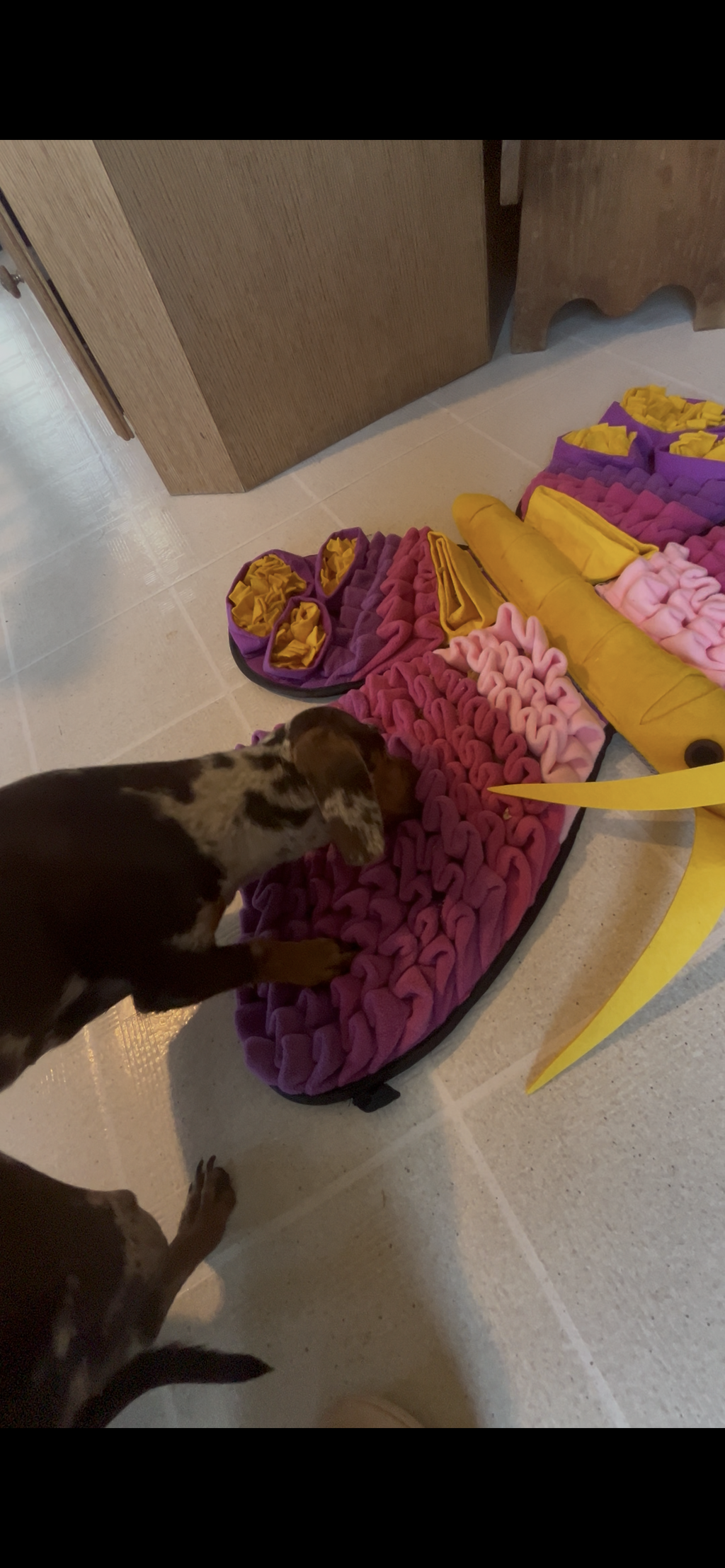
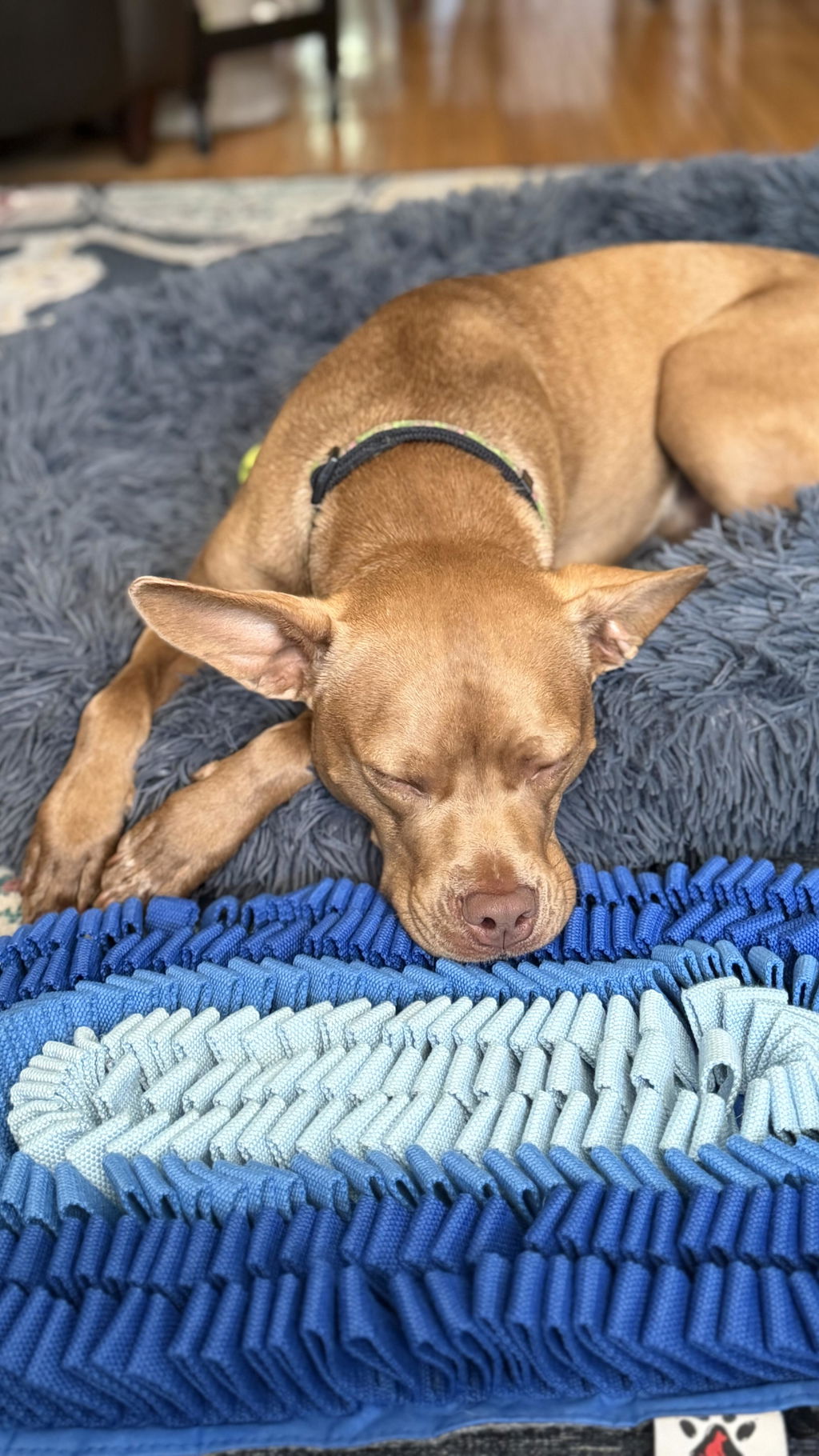
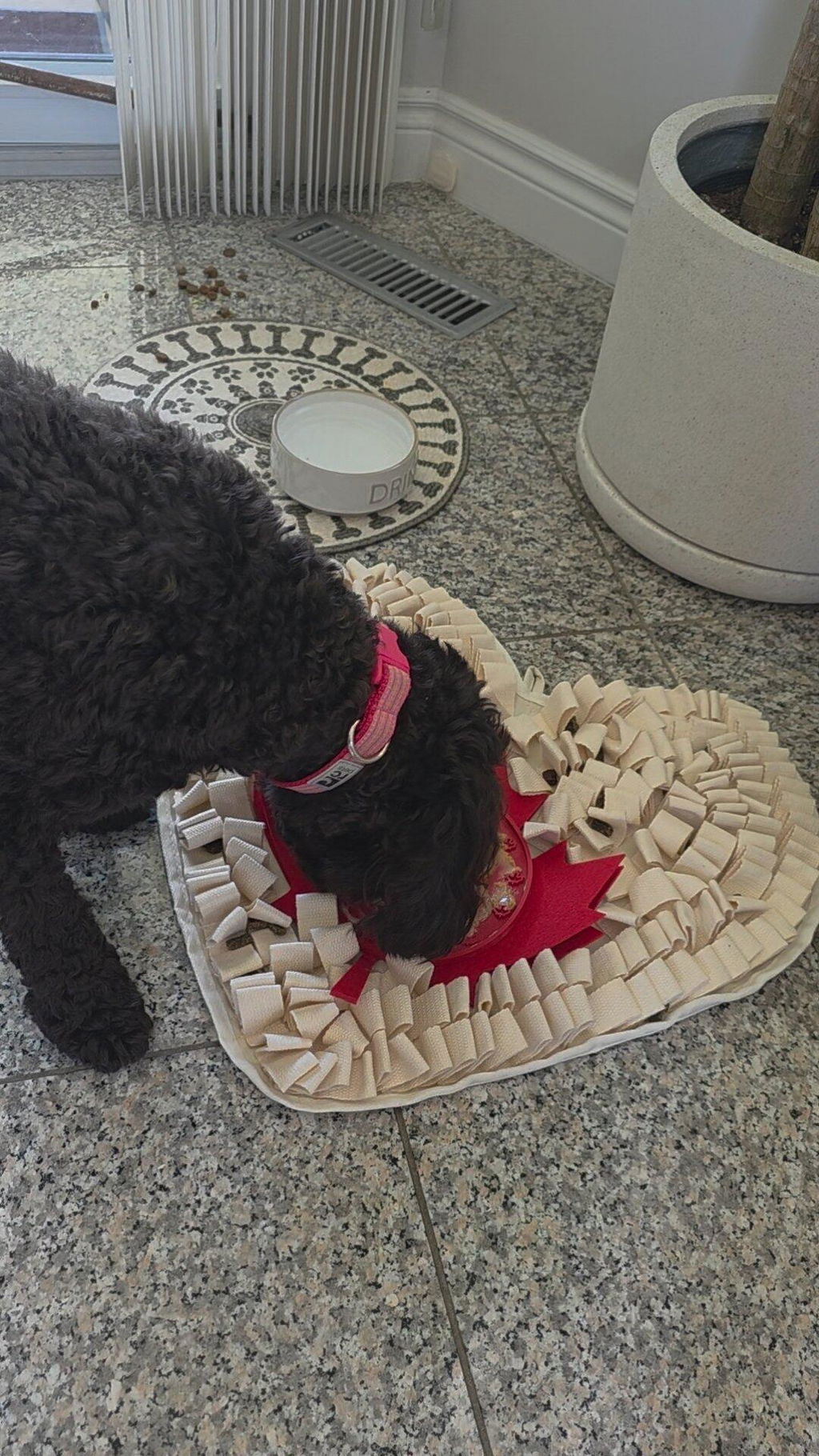
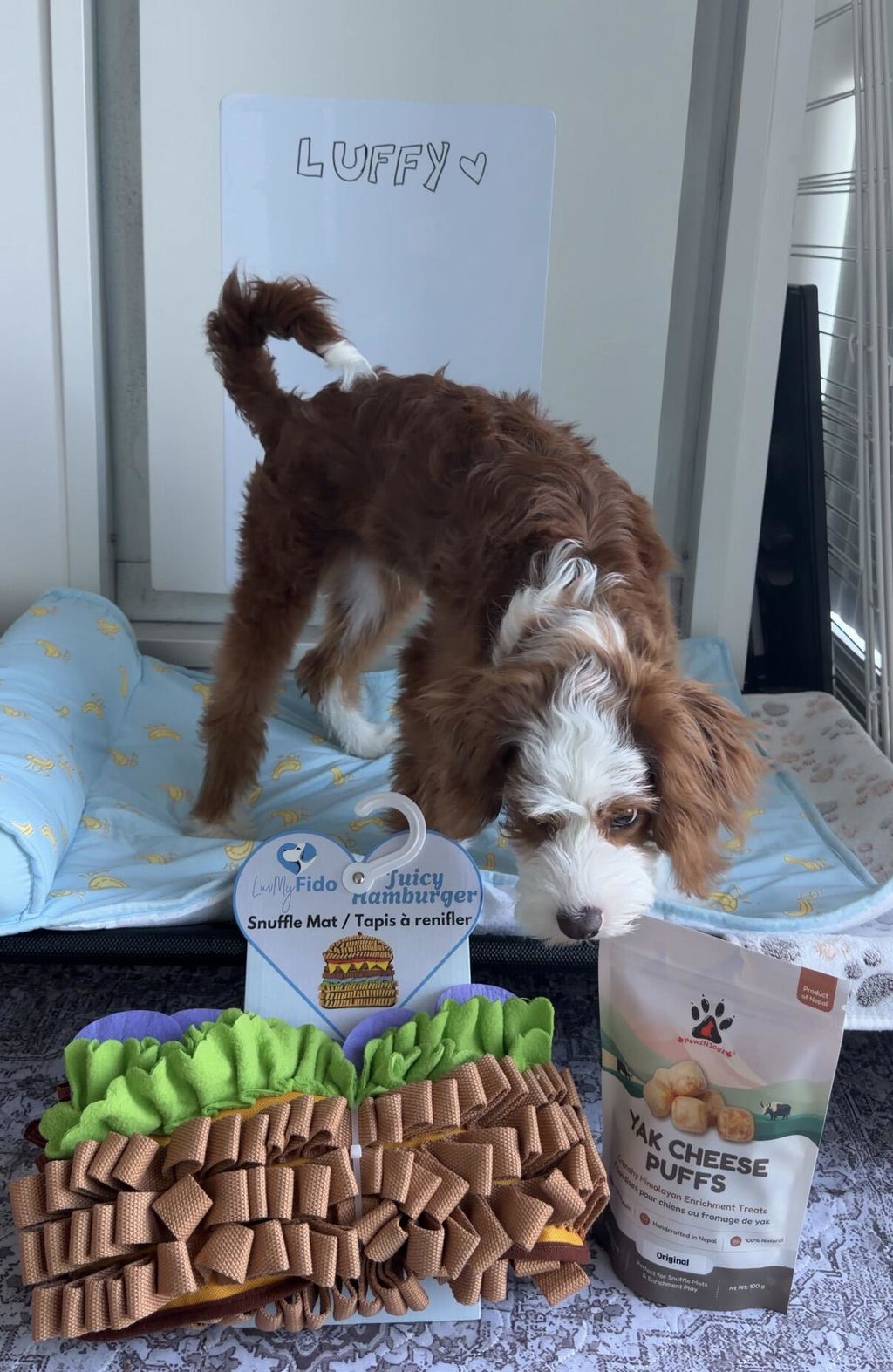
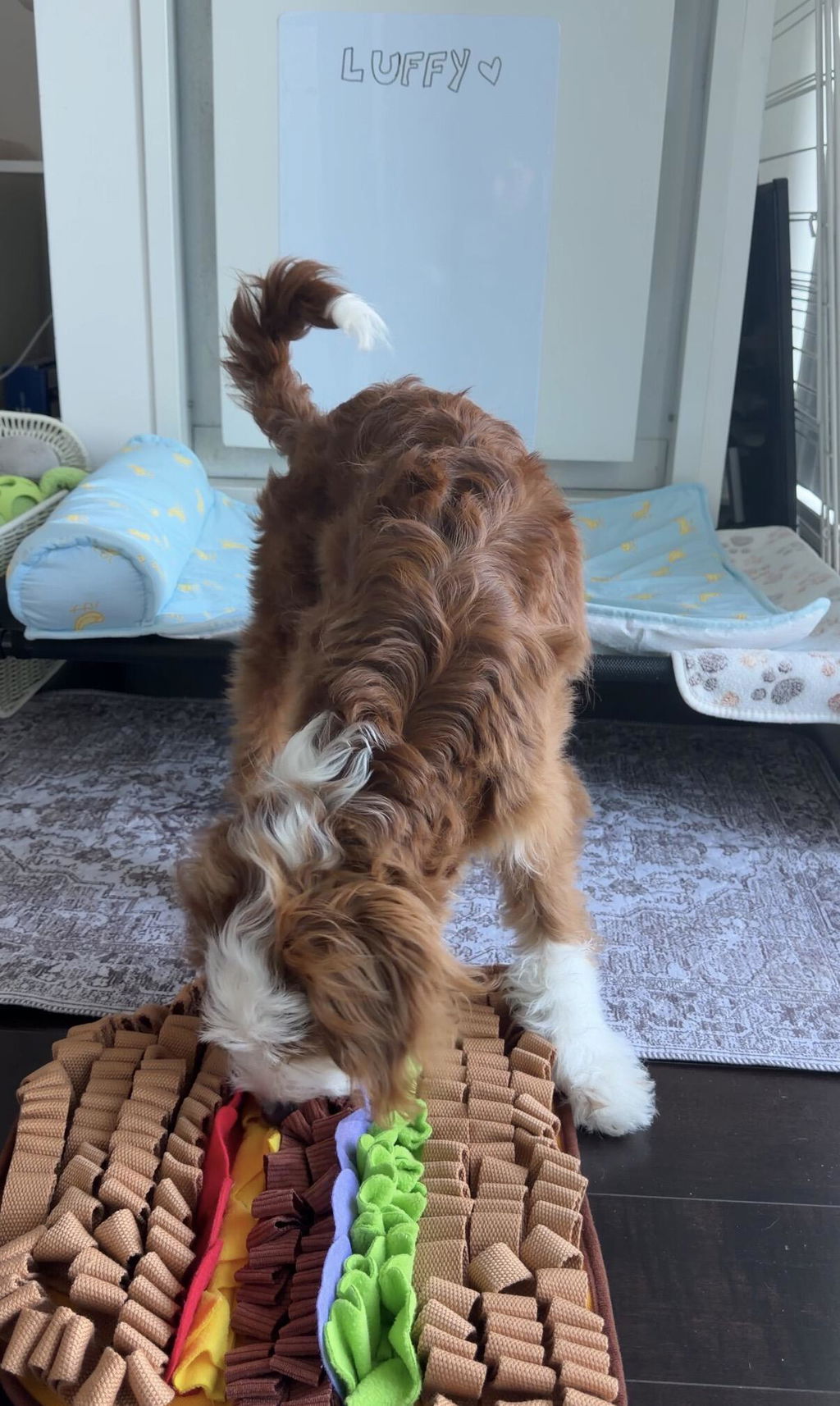
A snuffle mat is a foraging toy made from soft fabric strips tied through a base mat. Treats or kibble are concealed within the layers, which helps your dog to use their nose to sniff them out, engaging their natural foraging instincts. They’re suitable for dogs of all ages, simple to use, and easy to maintain.
Snuffle mats aren’t a magic fix, but for many dogs, they’re a genuinely meaningful part of supporting anxiety.
Sniffing Triggers a Calming Response
When a dog engages in focused nose work, their brain shifts into a more relaxed, parasympathetic state, heart rate slows, breathing steadies, and stress quietens. For an anxious dog, a snuffle mat session is a real neurological reset.
It Gives Them Something to Focus On Besides Your Departure
Departure cues, keys, coat, shoes, can trigger anxiety before you’ve even left. A snuffle mat gives your dog’s brain something else to do entirely: find the treats. That simple redirection can make a real difference.
Mental Fatigue Reduces Anxious Energy
The focused concentration of sniffing out hidden treats is genuinely tiring, in the best way. A mentally satisfied dog is a calmer, more settled dog. Think of it as giving their worried mind a healthy, satisfying job to do.
It Can Build a Positive Association With Alone Time
With consistency, the snuffle mat can shift your dog’s emotional response to being alone. “They’re leaving” starts to mean “snuffle mat time” rather than “danger.” That shift takes patience, but it’s genuinely possible.
How to Introduce a Snuffle Mat for Separation Anxiety?

Introducing the mat thoughtfully makes all the difference. Here’s a gentle, step-by-step approach:
- Start while you’re home, let your dog enjoy the mat with you nearby first to build a calm, positive association.
- Enrichment should always be supervised by humans. Sit nearby and let them sniff and forage; it’s quality time together.
- Introduce the mat before departure cues, not as you’re walking out the door.
- Keep departure energy calm and neutral, no big goodbyes, just the mat and a quiet exit.
- Use treats to keep your dog motivated and make each snuffle mat session extra rewarding.
What Snuffle Mats Can’t Fix?
A snuffle mat is a wonderful support for mild to moderate anxiety, but it’s not a treatment for severe separation anxiety. If your dog is panicking, injuring themselves, or unable to function when alone, please seek professional support from a vet or certified behaviourist. Enrichment works beautifully alongside expert guidance, not instead of it.
How To Choose the Right Snuffle Mat?
Finding the right snuffle mat, like Delicious Avocado™ AntiBite Snuffle Mat, part of the AntiBite Snuffle Mat collection, makes a real difference, especially when you’re using it as part of a calming routine. Construction, materials, and washability all affect how effective and long-lasting it will be. Here's what to look for:
- Pet-safe, non-toxic materials are especially important for dogs who mouth or chew their enrichment toys
- A non-slip base to keep the mat steady during enthusiastic sniffing sessions
- Dense, layered fabric strips that offer a real challenge, treats should be findable but not instantly obvious
- Durability that holds up to regular, energetic use without falling apart quickly
Why Enrichment Is One of the Kindest Things You Can Do for an Anxious Dog?
Enrichment isn't just about keeping a dog busy; it's about meeting a deep, instinctive need. Dogs are natural foragers, built to sniff and search. A snuffle mat creates space for exactly that. At PawzNDogz, our mats are crafted from durable, pet-safe materials for regular, enthusiastic use. Pop into a mesh laundry bag and machine wash; simple, reliable, and made with love.
Conclusion
Separation anxiety is distressing to your dog and to you. So with proper tools and patience, it can be better! A snuffle mat is an affirmative but warm and gentle step in the right direction, but it will not resolve everything right away. Take steps slowly, be constant, and allow your dog to learn that being alone can have its own little payoff. We believe in all of those dogs that are nervous.
FAQs
How do you break separation anxiety in dogs?
Gradually and compassionately, start with very short absences and build slowly. Enrichment tools like a snuffle mat or lick mat help redirect anxious energy and build positive associations. For moderate-to-severe cases, a certified trainer or veterinary behaviourist is strongly recommended.
Do vets recommend snuffle mats?
Many do! Snuffle mats are widely recognised as a low-stress enrichment tool that supports calming and mental engagement. The science behind nose work and its calming neurological effects is well established.
Can a dog be left alone for 12 hours?
Most adult dogs find 7-8 hours alone very difficult. A general guide is no more than 4–6 hours. If longer absences are unavoidable, a dog walker, doggy daycare, or pet sitter, alongside a good enrichment routine, can make a real difference.
Should I FaceTime my dog while on vacation?
It depends on your dog! Some find it comforting; others find it confusing. Observe their reaction carefully. A snuffle mat session before or after the call can help them settle either way.